












 SVG Sit-Down: ESPN's Chris Calcinari on New Flagship Mobile Unit, Cloud and REMI Production, Early Prep for Super Bowl LXI 2027 will mark ESPN's first Super Bowl broadcast By Jason Dachman, Editorial Director, U.S.
 Monday, April 28, 2025 - 11:21 am
Print This Story | Subscribe
Story Highlights
ESPN's content-operations group is currently in the midst of one of its busiest times of the year with NBA and NHL Playoffs in full swing and the NFL Draft wrapping up; Sunday Night Baseball, UFL spring football, NCAA spring sports championships, and NWSL ongoing; and WNBA tip-off and PGA Championship coming up next month. Add preparation for US Open tennis in August and NFL and college football in the fall, and it's obvious that Chris Calcinari, SVP, content operations, ESPN, has a full plate.
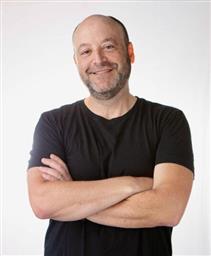
Chris Calcinari, SVP, content operations, ESPN
However, volume has always been the name of the game at ESPN, so this is nothing new. It's up to Calcinari's content-operations teams to ensure that this cavalcade of events and studio shows maintains the production quality fans have come to expect from ESPN's live broadcasts. That means not only managing the insane logistics of planning and executing more than 4,000 events and close to 10,000 studio shows in 2025 but also continuing to innovate with the latest production tech and storytelling tools the market has to offer.
SVG sat down with Calcinari to discuss how his team handles this exacting workload, ESPN's new once in a generation mobile unit Flagship (which is debuting for the NBA Playoffs), how the broadcaster's REMI and REMCO production models are evolving, the continued development of cloud-based production models, and how preparations are already underway for Super Bowl LXI -the first in company history - in 2027.
Nobody in the business handles more live event productions than ESPN, and that workload just seems to keep growing each year. How does your ops team handle that kind of volume?
It's true that the volume has been high for us for a very long time. But, no matter how many events we do, our goal is to provide the best fan experience we can. And we do that primarily with two factors: hard work and great technology.
I think the way our department is set up is unique in the industry; it's really a divide-and-conquer mentality here. We have functional teams staffed with industry leaders focused on their area of expertise. That includes our mobile-unit team, REMI team, crewing team, and traffic team, as well as other more-specialized groups like our in-house drone team.
Last year, we did 103,000 transmission paths and hired 80,000 remote technicians; I don't think anyone else is doing that kind of volume. We have hundreds of operations producers and specialists working here in Bristol, from home, and traveling around the country to get these shows done. It really is a divide-and-conquer mentality, with a big team focused in specialized areas. I would put our team of tech managers and operations managers up against anyone in the business. And, the way we have set things up, they are each able to focus on their specific area and attack a project head-on. Everyone knows what their role is, and they're experts in their field.
Your new mobile unit Flagship just launched for NBA Playoffs and will serve as the home of Monday Night Football in the fall. Why was the time right to launch a new fleet of mobile units?
EN1 [our mobile unit from NEP] launched more than 10 years ago [in 2013], so we were certainly due for a refresh. Obviously, with the Super Bowl looming [in 2027], we wanted to have a genuine state-of-the-art facility to execute that game. Those are the two core reasons. Though purpose-built for Monday Night Football, these trucks will be used year-round, starting with the NBA Playoffs this month and then the Western Conference Finals and the NBA Finals.
What were some of the key technological pillars you established early in conceiving these new trucks?
First off, we were focused on ST 2110 because we believed it offered us the agility and flexibility that we will need in the future. Aside from the core production-control room, pretty much the entire facility is made up of what we call sandboxes, which are workstations that can be used for almost any position you can think of. That's going to serve us well in the future, regardless of what happens down the road technologically.
ESPN's new Flagship mobile unit from Game Creek launched for the 2025 NBA Playoffs.
We also wanted the ability to scale up to UHD HDR. We're going to operate this mobile unit in 1080p HDR for now, but we will be able to flip the switch for UHD HDR any time we want. This gives us the flexibility to adapt to what the market demands in the future.
Going with 2110 also gives us the ability to scale up for a Super Bowl show, so we can expand significantly depending on our needs. We will run it in our normal robust configuration for Monday Night Football, but we can ramp it up much further to do a Super Bowl-level show. We also have total redundancy across the board.
Third, there are lot of new tools out since we launched EN1 more than a decade ago. We have two of the latest Calrec Argo Q [series audio consoles]: one for the main mix and one for the submix. And we have the latest Grass Valley Kayenne switcher, all Sony HDC-5500 cameras, and the new EVS XT-VIAs - all running fully in a 2110 environment.
We are calling it Flagship because it is, without question, our flagship mobile unit. Everything is top-of-the-line across the board, and it has been built with the Super Bowl in mind.
How was the experience working with Game Creek Video on Flagship?
We do business with everybody because we have plenty of business to do. We have a lot of volume and use pretty much everyone out there: Game